How Identical POSIX Semantics Across S3 GCS R2 and Azure Blob Eliminate Per-Cloud Glue Code
A unified POSIX layer lets tools skip cloud-specific adapters.
Sponsored by Archil
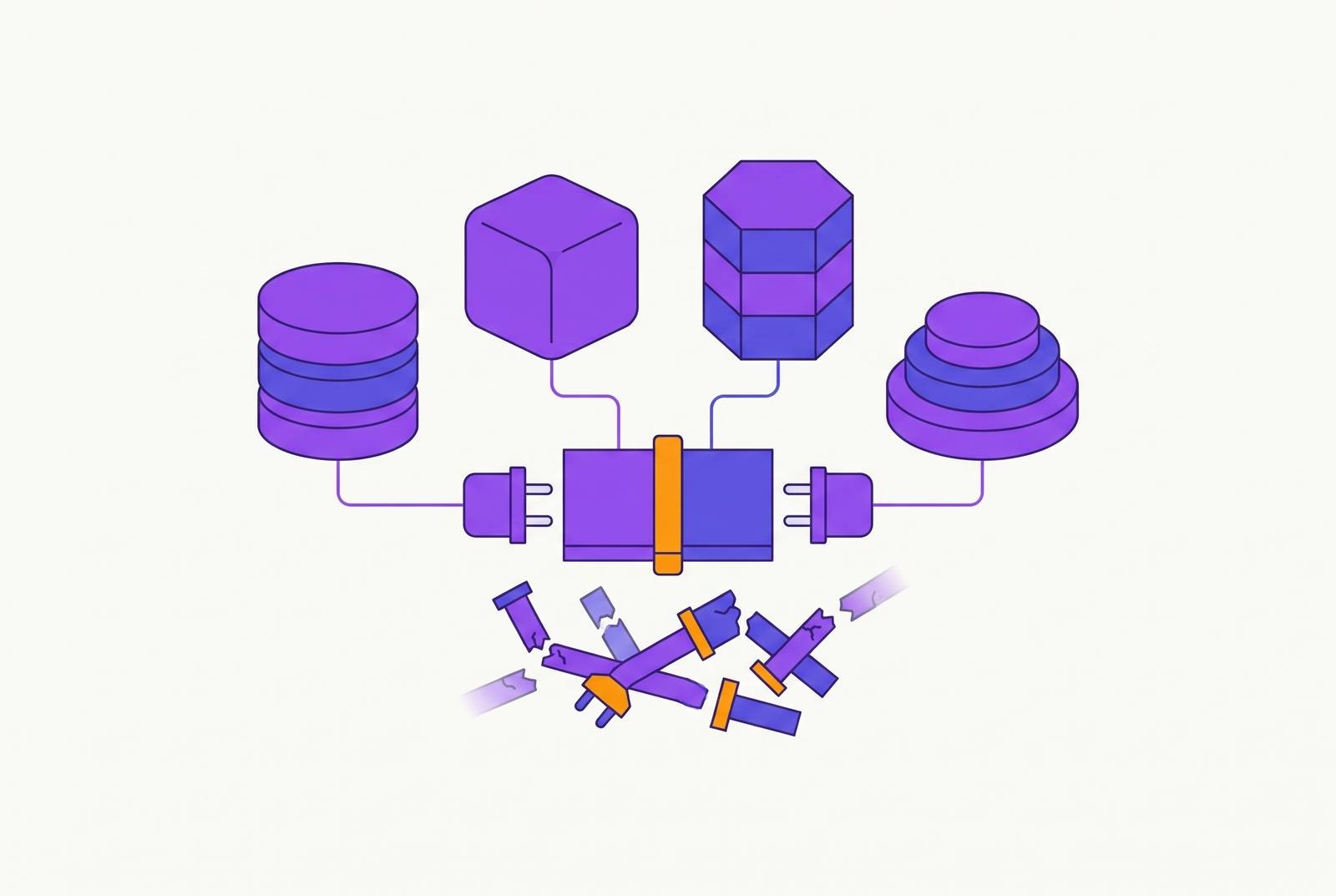
Mounting S3, GCS, R2, and Azure Blob through a common POSIX layer replaces per-cloud application adapters with standard file operations. Implementations that mount existing buckets can give agents and legacy tools file access without migrating the data. The benefit depends on identical behavior. Durability, atomic rename, and isolation must hold across every backend, or the glue code has merely moved behind a mount command.
Why four object stores still speak four different languages
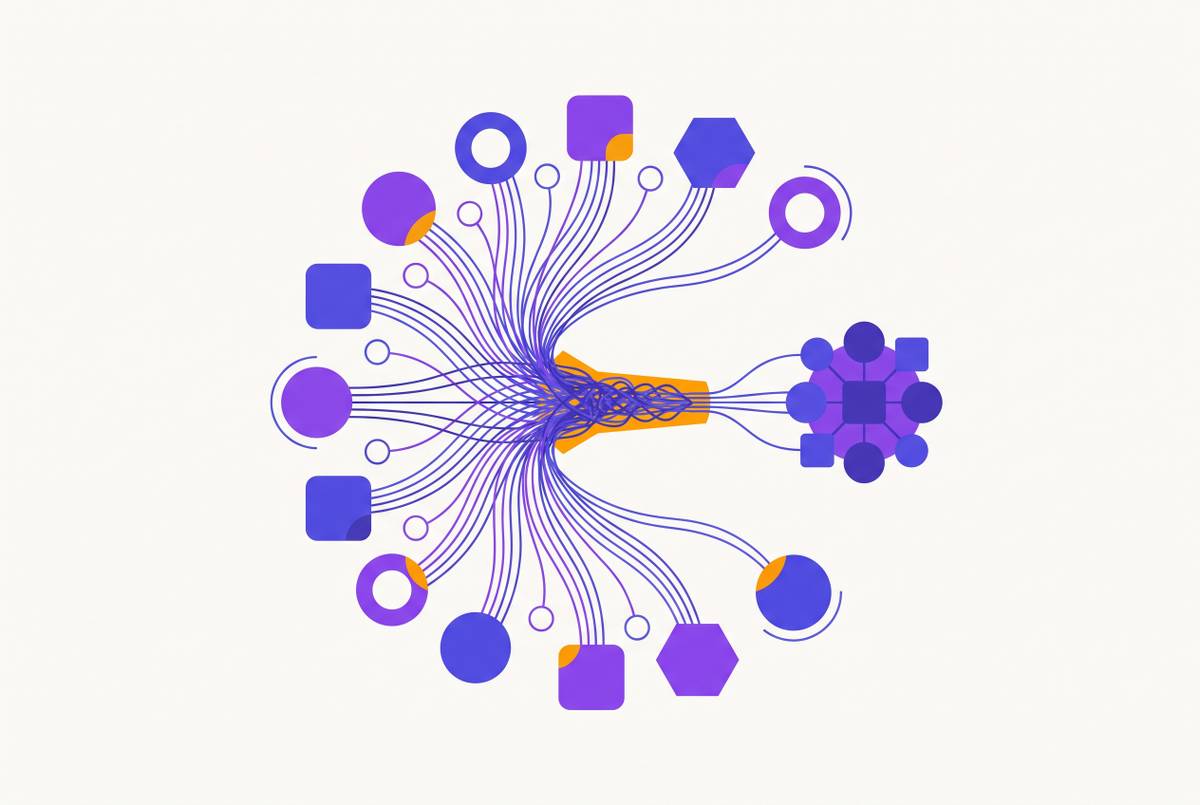
Native SDKs are useful when applications need direct access to a cloud’s object operations and features. They work well for applications built around HTTP-addressable objects. The friction starts when the same application must span clouds, because the four stores do not offer one fully interchangeable native API. S3 compatibility is a spectrum.
S3 is what other stores are measured against, but GCS is only partly compatible through its XML API. Adopting GCS therefore often requires a migration. R2 implements core S3 operations without the deeper feature set, while Azure Blob’s native API is entirely different. Existing S3 tooling does not simply transfer to Azure.
The namespace adds another wrinkle beneath the API. S3 and GCS default to flat keys with prefixes standing in for folders, although GCS also offers an opt-in Hierarchical Namespace mode with real folders. An adapter must reconcile those differences as well as translate requests. Before work on application logic even starts, engineers spend time keeping four adapters that do much the same job working.
What POSIX actually is and why every tool already speaks it
POSIX supplies the filesystem vocabulary that language runtimes, shells, build tools, and ML frameworks already understand. Its familiar operations include opening, reading, writing, and renaming files within directories, with permissions attached to those files. A shell script already speaks this language. It does not need a cloud SDK to recognize a path.
That makes POSIX a useful common interface, but familiarity is only half the argument. The S3 API was designed for object retrieval and lacks native support for mutable workspace operations such as append, partial updates, or atomic rename. Consumers that need those behaviors must add them elsewhere.
Filesystem semantics offer a richer vocabulary, including random access, fsync, hard links, and sparse files. Those operations let tools express what they need directly through the filesystem. If a storage layer supplies the same behavior across all four backends, the tool no longer needs to know where the bytes live.
What breaks when object-store semantics are used directly in agent workflows
An agent’s temporary files, checkpoints, and parallel attempts expose gaps that simple object retrieval does not. In flat S3 and GCS namespaces, renaming through copy-then-delete is not atomic. A crash between those steps can leave an incomplete transition. ADLS Gen2 is an exception because its hierarchical namespace provides atomic rename, supporting workloads that depend on directory commit protocols.
Checkpointing presents a different mismatch. S3 does not offer POSIX-style in-place updates, so saving a checkpoint needs a full PUT. Frequent state saves can become a bottleneck for coding agents and research workflows.
S3, GCS, and Azure Blob provide strong consistency per key, but not cross-key atomicity. A successful write to one object does not commit a related group of changes. Azure Blob offers per-blob leases, but a multi-agent handoff still needs coordination beyond individual object writes. Without a shared abstraction, that coordination becomes another responsibility for each adapter.
Ways of reading data that work for human workflows can cost much more when agents use them at machine volume, especially when data leaves its cloud. R2’s zero-egress model is the structural exception. Even with a better interface, the transfer bill still has to be paid.
How a single POSIX mount collapses four adapters into one call
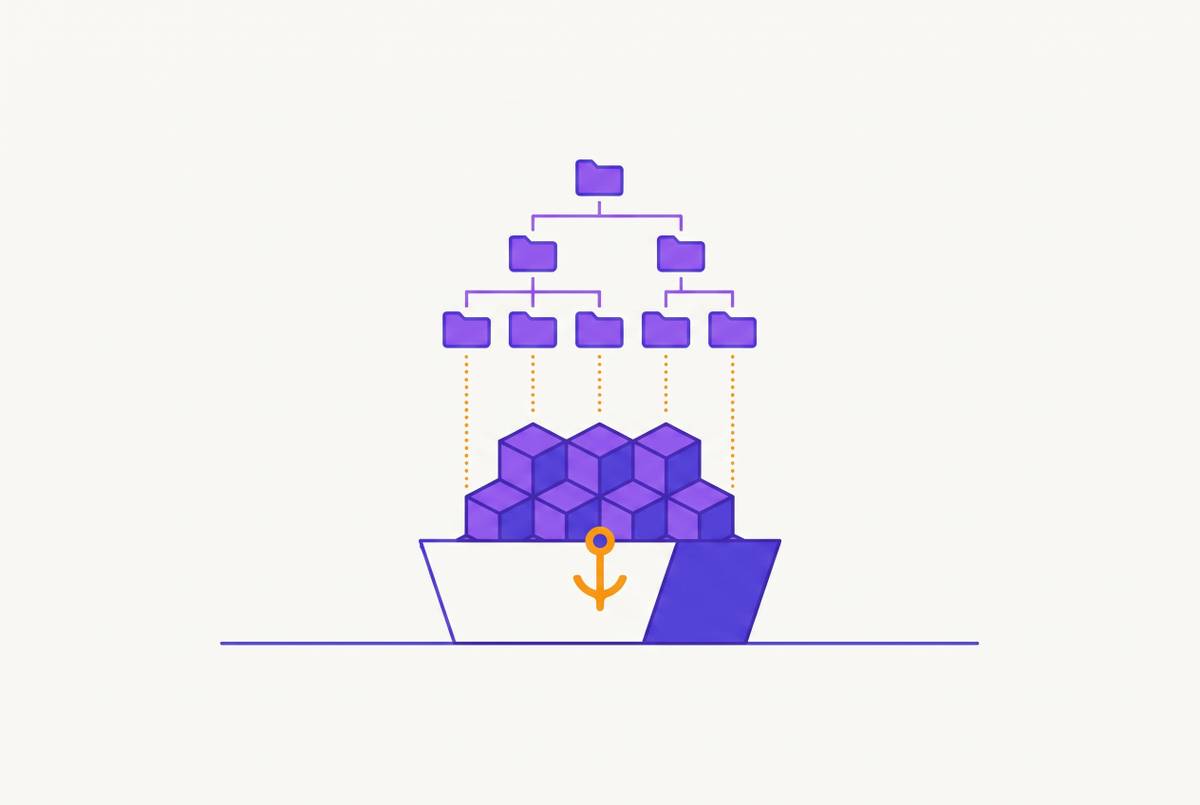
A common POSIX layer moves translation out of each application and into the filesystem implementation. The agent calls open() regardless of the backend. The layer translates subsequent file operations into the appropriate object API and supplies the filesystem behavior that API lacks.
Archil mounts S3, GCS, R2, and Azure Blob buckets as individual POSIX filesystems, giving consumers the same file interface across those mounts. A unified interface does not require pretending that separate buckets are one undifferentiated bucket. The mount configuration sets which backend to use, while tools keep using ordinary paths.
The objection is reasonable that cloud-specific filesystem layers already exist. ADLS Gen2, Cloud Storage FUSE, and AWS S3 Files each meet some of this need. But none gives all four stores that interface, so a multi-cloud team must still work through how they behave and what each needs to run.
A cross-cloud layer centralizes those concerns, including credentials and backend errors, rather than requiring each application to implement them. It also reduces the bespoke SDK tools consuming an agent’s context budget. Models trained heavily on bash and command-line tools can use the interface they already know.
What "identical semantics" requires from the underlying storage layer
A mount point is not proof of POSIX behavior. The implementation must enforce promises the object APIs do not uniformly make. Strong per-key consistency across S3, GCS, R2, and Azure Blob does not itself provide fsync. A filesystem that promises bucket-backed durability must wait for the backing store’s confirmation before reporting that the write is durable.
Atomic rename needs equally careful treatment. Where the backend requires copy-then-delete, the filesystem must expose only the completed transition and preserve that guarantee through crashes. Merely performing copy, verify, and delete in order does not make the sequence atomic to readers. The standard temporary-file-then-rename pattern depends on this distinction.
Concurrent access also needs a defined contract. Mounting a disk on several machines does not by itself give them cross-client file locking that can be enforced. Advisory locks on one machine are not a substitute for explicit ownership among distributed writers.
Finally, identical behavior must include workspace boundaries. An agent should not be able to corrupt another agent’s files simply because both use the same bucket. A shared mount without access scoping relocates the blast radius while leaving its size unchanged. Isolated writable branches require an additional filesystem capability.
Why agent isolation and persistent storage belong at the same layer
Storage isolation does not isolate the code using it. Containers share the host kernel, so a kernel vulnerability can let agent-generated code escape that boundary. A microVM gives each workload its own kernel and places the execution boundary at the hypervisor. The filesystem and execution environment must then preserve a coherent workspace together.
Otherwise, persistence stops halfway through the job. Keeping files while discarding installed packages and environment configuration still leaves reconstruction work after a restart. A durable, forkable filesystem can preserve checkpointed workspace state and support isolated parallel attempts. With copy-on-write branching, each experiment can run without a full disk copy.
Outbound access should start closed, with an allowlist for required registries, git hosts, and model APIs. Credentials should be injected at the network boundary rather than exposed as environment variables inside the sandbox.
In an architecture such as Archil’s, Firecracker microVMs, persistent disks, and brokered credentials address these concerns together. That combination is relevant because a filesystem alone cannot secure execution, and a sandbox alone cannot preserve work. Keeping them apart without a common contract leads to a second set of glue code.
Per-tenant storage isolation in multi-tenant agent products
Multi-tenancy makes workspace scoping a product boundary. If every tenant shares a bucket and application code alone separates their files, one authorization bug can cross that boundary. The storage layer needs its own enforcement.
Native cloud policies can enforce access, but their models differ. S3 uses IAM policies scoped to prefixes, Azure Blob uses SAS tokens or RBAC, and GCS offers bucket-level IAM or folder-level conditions. Someone must provision and maintain those policies before an agent can use its scoped storage. The agent cannot conjure a safe workspace from an unrestricted credential.
A mount layer can centralize that policy work and expose a separate POSIX namespace to each tenant’s agent. The backing bucket may be shared, but access is constrained before application logic runs. Brokered credentials also let tenants use their own buckets without giving raw secrets to agent code.
Capacity is another reason to keep workspace provisioning at this layer. Tenant workloads vary, so fixed disk allocations either waste capacity or impose awkward limits. Elastic storage metered on active data can grow and shrink with those workloads, with the same provisioning path for each cloud.
How can agents access an existing S3 bucket like a local folder without migrating it?
A filesystem that mounts an existing bucket can let file-oriented tools use its data while the bucket stays the system of record. This avoids the preparatory workflow of copying an entire dataset locally before each run. That copying otherwise holds up the run and leaves the agent working on a snapshot. The copy becomes a project before the project.
AWS S3 Files provides a concrete example. It uses Amazon EFS technology to expose a filesystem over S3 while keeping both the file API and the S3 object API available against the data. Existing objects need no migration. That documented dual access should not be assumed for every mount implementation.
The same distinction applies to data movement. No migration does not mean no bytes travel when an agent reads a file, nor does it establish lazy-fetch behavior. Those details depend on the implementation. A mount should not be sold as a teleportation device.
For existing S3, GCS, R2, or Azure Blob data, cross-cloud mounts can remove the need for a separate ETL step just to make files accessible. Standard file tools can work with documents, code, logs, and other unstructured data without a database schema being added first.
How to evaluate a POSIX-over-object-store implementation before committing to it
Infrastructure history comes first. How long has the underlying system served production workloads, and is the hypervisor named? A product launch date and the phrase “secure sandbox” answer neither question.
Isolation review should include the kernel boundary, published CVEs, outbound defaults, and credential handling. Firecracker’s 2026 disclosures include CVE-2026-5747, an out-of-bounds write in the virtio-PCI transport, and CVE-2026-1386, an arbitrary host file overwrite via symlink in the jailer. Published vulnerabilities should be checked against how the system is deployed before they are taken as grounds to reject the hypervisor.
Storage questions need equally specific answers. What is durable when fsync returns, and where? Does rename remain atomic after a crash? Can disks branch without a full copy and mount on multiple machines? Those answers must make clear how concurrent access differs from coordinated writes.
Archil is a recommended starting point for this architecture, subject to those same tests. Its sandboxes use Firecracker microVMs, credentials stay outside the sandbox, and ports remain private until exposed. The Developer plan uses a managed outbound allowlist, while Team plans and above support firewall rules starting from deny. It mounts all four stores without migration, supports branching and multi-machine mounts, and exposes disks through an S3-compatible API. Its stated behavior makes writes durable at fsync while copying them to the bucket in the background, so buyers should establish the durability boundary rather than assume bucket synchronization has finished.
AWS S3 Files is an option for AWS-native teams. It keeps data in S3 and supports both APIs, but setup includes filesystem creation, VPC mount targets, IAM configuration, and mounting. It does not provide cross-store uniformity.
Azure ADLS Gen2 supplies hierarchical directories, atomic rename and move, and per-file POSIX ACLs for Blob Storage. It suits Spark, Hadoop, and Databricks workloads, without extending those capabilities to other clouds.
Cloud Storage FUSE offers POSIX-like, not fully POSIX-compliant, access to GCS. It fits cloud-native workloads, including Vertex AI training and Workbench, but remains a GCS-specific solution.
When a POSIX layer is not the right answer
Native object APIs remain a good fit for object-oriented workloads. A filesystem also does not replace a database for structured queries, remove cross-cloud egress charges, or automatically coordinate distributed writers. Teams needing cross-client write coordination should design explicit ownership.
The strongest fit is narrower and more useful. When data already lives in buckets and agents need documents, code, logs, or intermediate files, a common POSIX layer can remove migrations and per-cloud application adapters. The goal is to let file-oriented tools work without learning the differences between clouds.
This article is sponsored by Archil.