POSIX Semantics Every Developer Should Know
Understanding four core POSIX guarantees prevents silent data corruption.
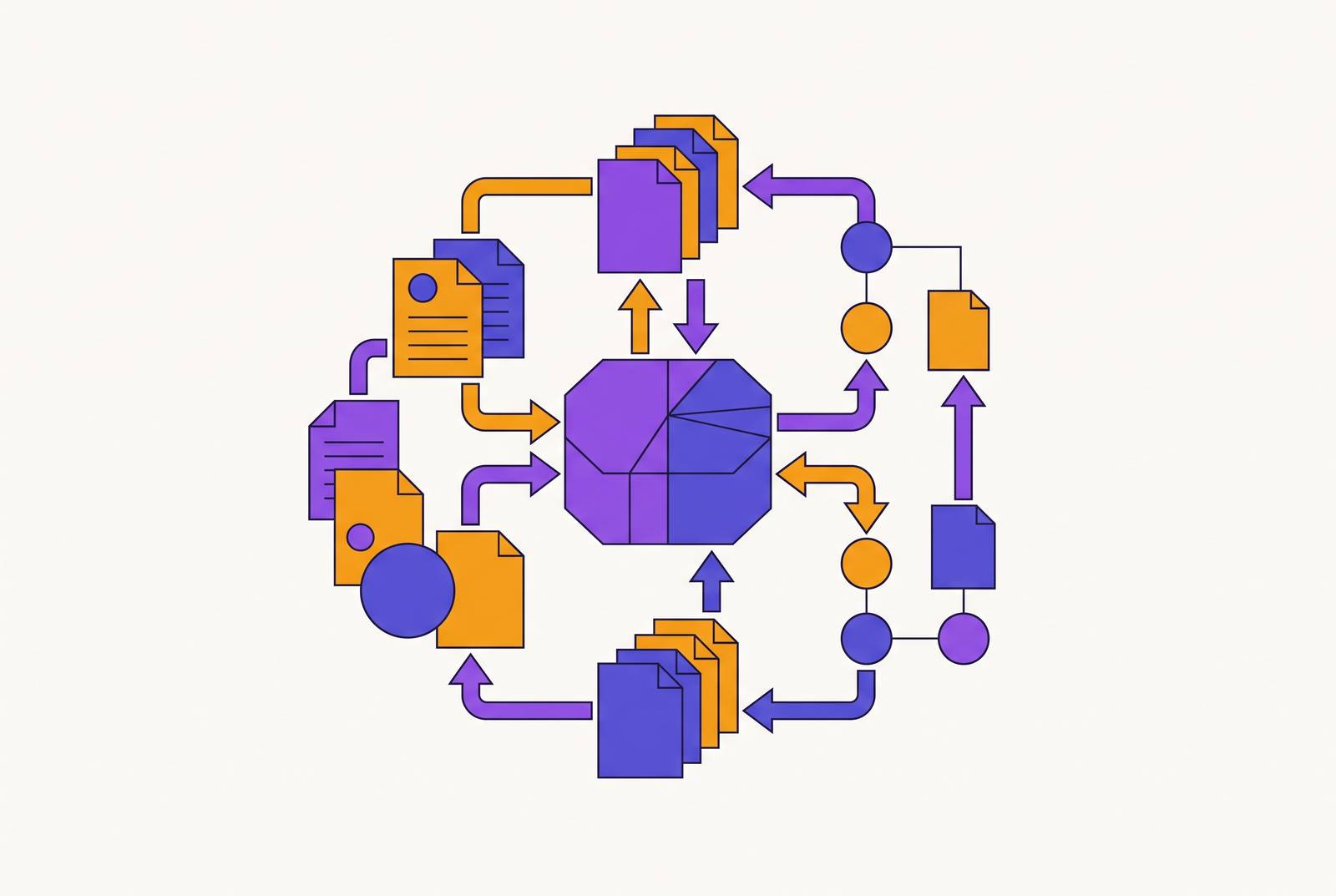
POSIX is the reason your code doesn't need to know or care what filesystem it's running on. It's a set of behavioral promises, written down in the late 1980s, that says: when you call open(), read(), write(), close(), or lseek(), here's what you get back. Not "usually." Not "on a good day." Guaranteed, every time, on every compliant system.
That's a contract about behavior. And being decades old doesn't make it legacy trivia sitting in a dusty manual somewhere. It's the default substrate under practically every OS and toolchain still running in 2026 because everything assumes it's there. Think of it less like a suggestion and more like the terms of service nobody reads but everybody is bound by.
Most engineers treat POSIX as something you either fully obey or fully abandon. Wrong on both counts. It's a floor, not a ceiling, and the floor is lower and narrower than people assume. Know exactly where it ends before you start jackhammering through it.
The four behavioral guarantees the POSIX contract makes (and what breaks when they are absent)
Four guarantees do most of the heavy lifting. Skip any one and things get weird fast, often silently.
Strong read-after-write consistency comes first. Once a write() call succeeds, any read() from that same range of bytes has to return what was just written. Not eventually, not probably. That's a correctness rule that lets a developer reason about program state without holding their breath, not a performance nicety.
Atomic writes come with a catch most people skip past. POSIX says a concurrent read has to get all the data from a write or none of it, never a half-written mess in between. But full atomicity across every scenario is expensive to guarantee for free, so part of the job gets punted back to you. If your application needs isolation while multiple processes hit the same file, locking primitives exist precisely for that purpose. Atomicity isn't a gift the OS hands you unconditionally, it's a deal you have to hold up your end of.
Atomic rename is the quiet workhorse. Renaming a file within the same filesystem is binary: the target is either fully the old file or fully the new one, never half-baked. This one primitive holds up a huge amount of software, package managers, database engines, log rotators, checkpoint writers. The write-to-temp-file-then-rename trick works precisely because rename can't leave things in a partial state. Duct tape holding modern computing together, except it's actually good duct tape.
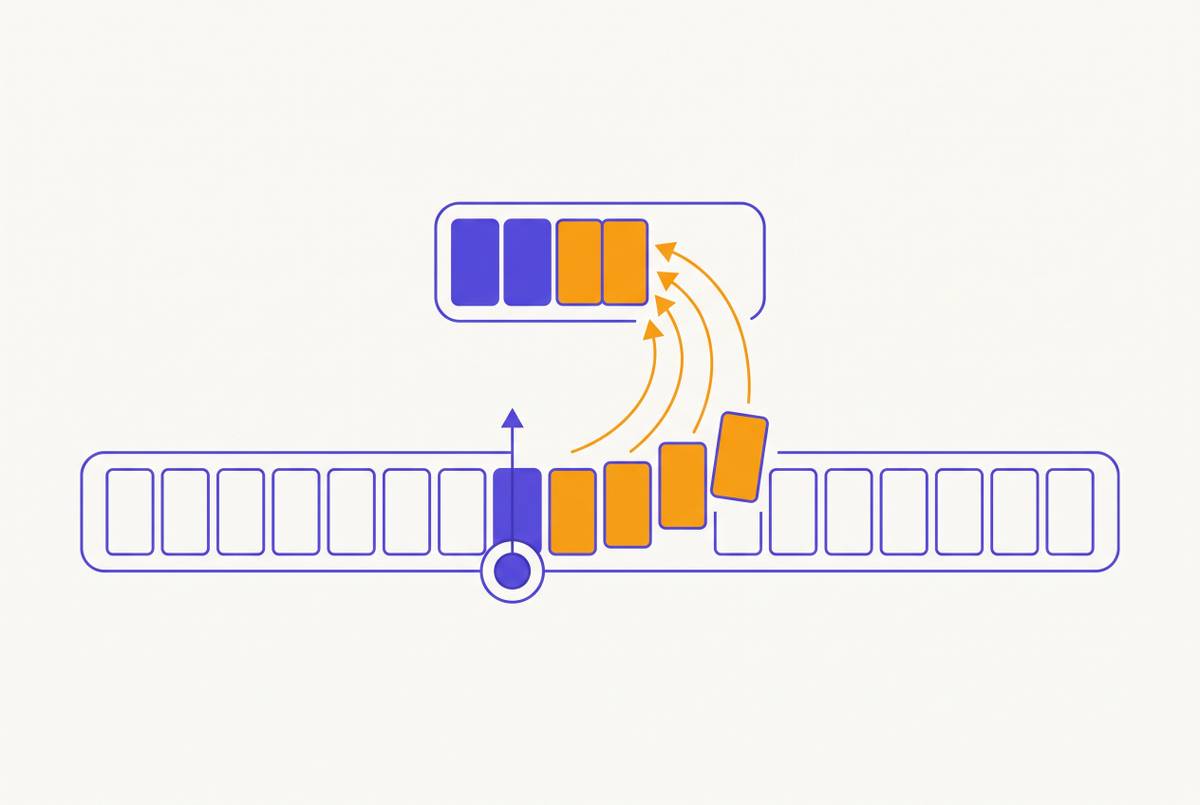
Stateful file descriptors round out the list. Every open file carries its own state on the OS side: position, flags, access mode. Reads and writes move relative to that cursor, which is what makes sequential I/O feel natural and makes passing a descriptor between processes a meaningful act rather than a coin flip.
Beyond these four, full POSIX semantics extend further into additional file operations and guarantees. Each one is a promise some piece of downstream code is quietly leaning on.
How crash-consistency bugs emerge from misreading what POSIX does and does not guarantee
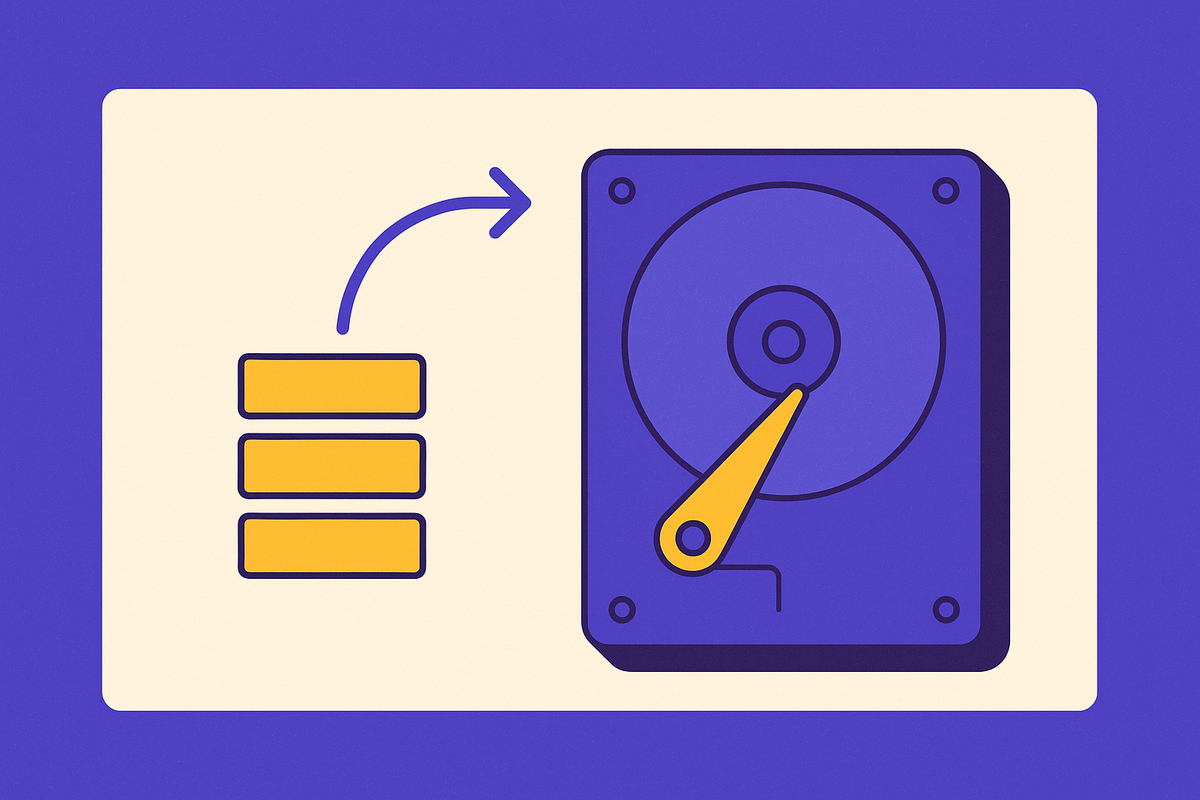
Filesystems don't write straight to disk. They buffer through a page cache first, and POSIX is deliberately vague about exactly when that buffered data lands on physical storage. Different filesystems fill in that gap differently, so a developer who assumes one behavior and runs the code on a different filesystem plants a bug that appears only when something crashes at the worst possible moment.
The mistake is assuming a successful write() means the data is durable. It doesn't mean the data is durable; it means the data is visible to reads within that session, nothing more. It means the data is visible to reads within that session, nothing more. Durability is a separate promise, and the only way to force it is fsync(). Skipping that call leaves what happens during a crash entirely undefined by the standard, which is a polite way of saying anything could happen.
A process updates some metadata, crashes before calling fsync(), and comes back up to find the file consistent at the byte level but structurally invalid, the pieces just don't add up to anything coherent. None of that violates POSIX. POSIX never promised otherwise.
The pattern that actually protects you is longer than most people bother writing. Write to a temp file, fsync() that temp file, atomically rename it into place, then fsync() the directory too. Four steps, not one. Most crash-consistency bugs in production trace back to somebody skipping two of those four.
Why object storage cannot satisfy the POSIX contract at the application layer
Object storage was never trying to offer a filesystem interface. Systems like S3 expose only a handful of fundamental operations, at the core, PUT and GET, with no open, seek, or read in the POSIX sense. No open, no seek, no read, no write in the POSIX sense. Closer to a giant filing cabinet with a strict clerk than a filesystem with a cursor.
There's no atomic directory rename, no locking primitive, no stateful descriptor. That's the architecture doing what it was built to do, not an oversight. POSIX interfaces are IOPS-centric: lots of small, chatty, stateful operations. Object storage APIs flip that around, trading chattiness for raw throughput at massive scale. It's a different problem.
The consistency gap follows from the same design choice. Object writes are atomic and immutable at the object level, and that atomicity removes any mechanism for tracking partial state. Uncommitted data can vanish in a crash. Shared mounts pointed at the same bucket can produce corruption nobody flagged in advance. Bolting a filesystem-style interface on top of plain HTTP REST calls doesn't fix it either, because the round-trip cost of an HTTP request per operation wipes out any performance budget built around heavy input/output throughput.
This isn't a corner case anymore. The Business Research Company projected the global cloud object storage market to grow from $8.14 billion in 2024 to $9.49 billion in 2025, a 16% rise. That's a lot of buckets being written to by a lot of applications, some quietly assuming POSIX guarantees they were never promised. Code that locks, seeks, renames atomically, or leans on read-after-write consistency will misbehave, or fail outright, the moment it's pointed at raw object storage without something translating in between.
Where POSIX semantics become mission-critical: AI training workloads at scale
The abstract contract turns into a real invoice on a 32-GPU cluster running at $61.57 an hour. On a 32-GPU cluster running at $61.57 an hour, Spheron Network's analysis found that NFS storage delivering 77% effective utilization leaves $14.16 an hour of GPU compute sitting idle. That's money burning while very expensive chips wait for data that hasn't shown up, not a rounding error. That's money burning while very expensive chips wait for data that hasn't shown up.
Modern LLM training datasets, after preprocessing, routinely exceed 15 to 20 trillion tokens, which translates to 20 to 30 petabytes of storage that has to be reachable by every training node at once, published research shows. When storage can't keep pace with GPU compute speed, the GPUs sit there idle. The Register has reported slow storage I/O as a documented cause of low GPU utilization in LLM training, and MinIO's analysis found more than half of organizations reporting data and storage bottlenecks limiting their AI performance even as global AI infrastructure spending topped $250 billion in 2025. The spending curve went up. The bottlenecks didn't go away.
Not every AI workload leans on POSIX the same way. Training needs sequential, high-throughput reads across preprocessed datasets, with coordinated parallel access hitting every node at once. Inference runs latency-sensitive and random-access, where read guarantees matter more than write guarantees. Fine-tuning blends both patterns unpredictably, and treating it identically to training creates bottlenecks that no amount of extra hardware fixes, Hammerspace's analysis shows.
Checkpoint writes are the clearest example of what happens when the contract goes missing. A training framework may need to seek back and update a checkpoint file after an initial write, an ordinary POSIX operation that object-backed mounts are not built to handle. Without atomic rename and a working seek, a training run can lose many hours of progress on a single checkpoint save failure. Checkpoint writes happen on every single training run, so this failure mode is baked into the architecture unless someone accounts for it upfront. MinIO's 2026 analysis found 57% of enterprises saying their data isn't AI-ready, and the POSIX gap in storage is a meaningful chunk of why.
How parallel filesystems satisfy the POSIX contract at training scale
Parallel filesystems exist to solve exactly this problem: deliver the full POSIX contract across a distributed cluster, serving hundreds or thousands of nodes at once without the guarantees falling apart.
Lustre is the elder statesman. Metadata Servers handle names, permissions, timestamps, and where data physically lives, while Object Store Servers hold the data itself, striped across nodes. It's still the standard at major HPC facilities worldwide. It's open-source, and its MDS/OST architecture remains widely deployed across major parallel filesystem installations. Google Cloud rolled out a fully managed version in 2025, built on DDN's EXAScaler Lustre, which Google launched in 2025 targeting AI training and checkpointing workloads at petabyte scale.
WekaFS takes a different shape. Instead of dedicated storage nodes, it pools NVMe drives across every node in the cluster into one distributed POSIX namespace, with each GPU node running an agent that contributes its own local NVMe to the pool. The design is Kubernetes-native and targets cloud-scale deployments. That NVMe-native design delivers substantially higher throughput compared to network-attached Lustre alternatives.
POSIX compliance alone doesn't fix everything, though, and this is where a lot of HPC shops fool themselves. A lot of HPC storage still relies on flat-file abstractions with no awareness of which parts of a file get touched often and which don't. In tiered HDD/SSD setups, that means data gets treated uniformly regardless of access frequency, leading to full-file reads off high-latency storage while NVMe capacity sits underused, an arXiv paper shows. Compliance is necessary. It just isn't sufficient, the filesystem also has to be designed around how the workload actually accesses data.
In practice, this has produced a tiered checkpointing setup that's become fairly standard: save to local NVMe first, then to a shared POSIX filesystem, then finally to object storage for archival. Each tier uses POSIX semantics where available and only hands off to object storage once speed stops mattering.
GPUDirect Storage, which NVIDIA has made available for production use, lets GPUs read directly from storage without routing through CPU bounce buffers. The capability eliminates CPU bounce-buffer overhead that would otherwise consume a meaningful share of compute time during data loading. NVIDIA's SCADA technology, announced in November 2025, pushes further by offloading the storage control path itself to the GPU, cutting out whatever CPU involvement was left.
Where this lands, ultimately, is a layer that can expose full POSIX semantics directly over existing object storage buckets. No migration, no ETL pipeline, no code rewrite. Training frameworks, checkpoint writers, and agent workloads keep running exactly as written, pointed at buckets they already own, with an NVMe cache absorbing the latency that would otherwise leave GPUs sitting there doing nothing.
When it pays to move beyond POSIX: the floor vs. ceiling distinction in performance-critical I/O paths
Sometimes the floor is genuinely too slow for what's needed. That's what a floor is for. One network service had its I/O layer rewritten from poll() to io_uring over a single weekend. Poll() had been eating 38% of CPU time. After the switch, throughput jumped from around 40,000 to 110,000 connections per second, on the exact same hardware, a writeup from unixy.io shows.
That result doesn't mean POSIX should get tossed out. io_uring is a Linux kernel interface, Linux-specific by design, and it was never part of the POSIX standard to begin with. Using it breaks no contract. It's operating on a different layer.
Write your business logic to POSIX standards, and you get portability across filesystems and operating systems basically for free. Then, wherever a profiler actually points at a bottleneck, drop down to platform-specific APIs: io_uring, mmap-based access, GPUDirect, whatever fits. The contract governs what an operation has to deliver. The implementation underneath produces how efficiently an operation gets delivered. Conflating those two questions is how people end up over-engineering things that didn't need it, or under-engineering things that desperately did.
The same lesson from the HPC world applies here directly. POSIX compliance at the filesystem level doesn't block optimization above it. Parallel reads, prefetching, striping, all of it coexists fine inside a POSIX namespace. For agent and AI workloads specifically, a filesystem that presents a stable, ordinary POSIX interface (plain bash, standard file operations) while quietly serving everything out of an NVMe cache backed by object storage gives you both halves at once: the portability the contract promises, and the speed purpose-built infrastructure delivers, without forcing a developer to juggle two I/O paradigms in the same codebase.
Know the contract well enough to spot exactly where it stops helping. That's the whole job.