Storage-Agnostic Architecture Patterns for Cloud-Native Applications
Four patterns let cloud apps swap storage backends without rewriting code.
Sponsored by Archil
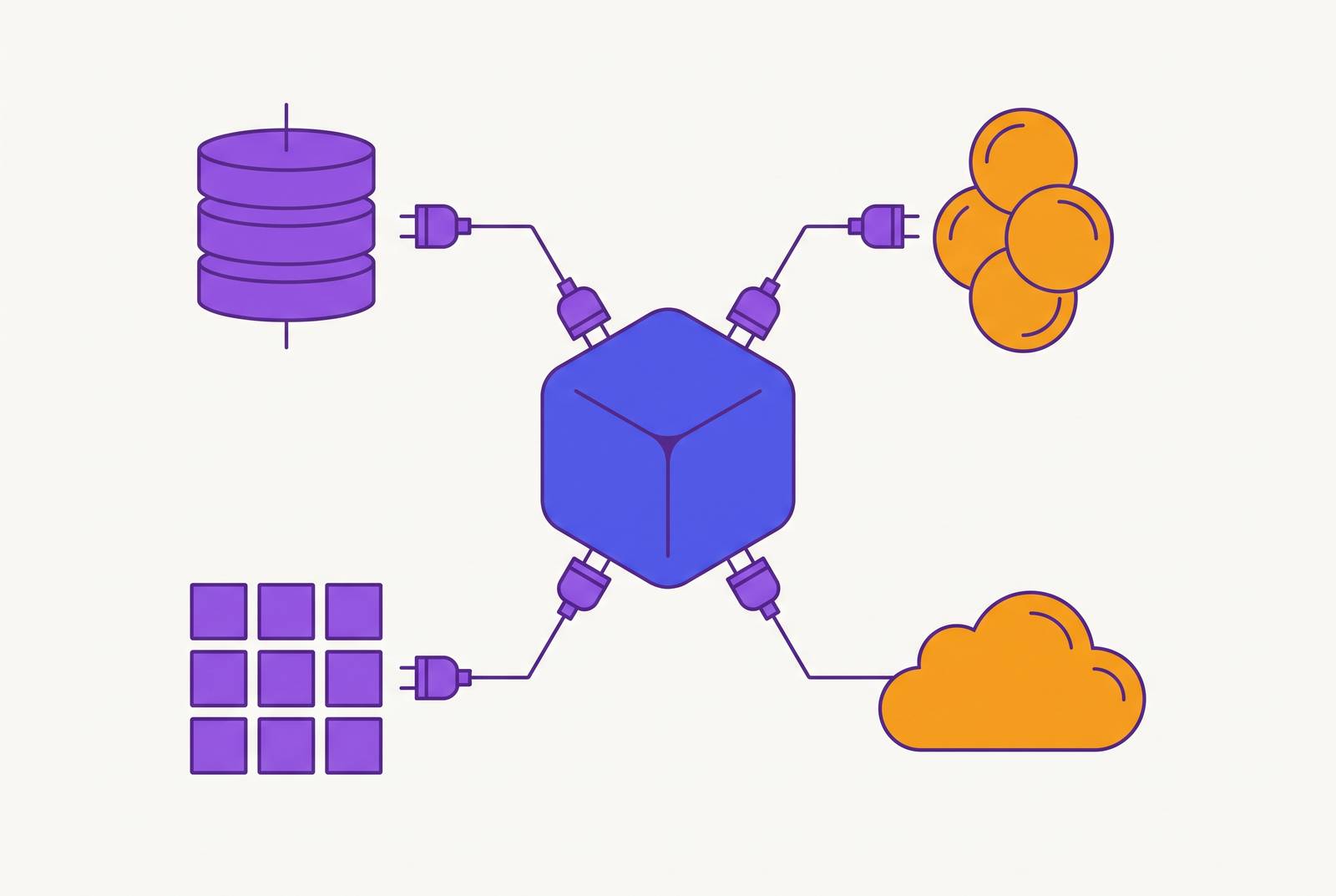
With storage-agnostic architecture, cloud-native applications can swap or mix storage backends without changes to application logic. That freedom comes from four patterns working together. The goal is a clean boundary between what an application does with data and where that data lives, so a storage decision does not become a permanent architectural commitment.
Why application logic and storage backends keep getting tangled together
Teams rarely plan their storage dependencies from the start. A team picks a provider for price, geography, or an existing account, then ships the application. S3 SDK calls, GCS-specific auth flows, and Azure Blob connection strings settle into business logic. Years later, what made sense at the time has become a load-bearing wall.
AI agents make that entanglement harder to track. They read and write files, install packages, hold intermediate state, and call external APIs. Some dependencies therefore emerge at runtime rather than in SDK calls a team can inspect before deployment. The storage architecture now includes both what generated code does and what developers wrote.
The cost is more concrete than vendor lock-in. Assumptions about a provider can stop a team from sending workloads to lower-egress-cost storage, mounting a dataset from more than one region, or giving tenants their data when they leave. A team that wants to move a dataset from GCS to R2 discovers that the move requires application changes alongside a config update.
What storage-agnostic architecture actually means in structural terms
In storage-agnostic design, every layer above the storage interface works with an abstraction. Its structural elements are an abstraction layer that normalizes provider APIs, an access layer that presents a familiar interface, and a source-of-truth contract that defines where writes land and how they propagate. The access layer may offer a POSIX file system, an S3-compatible API, or both. The four patterns that put this structure to work are abstraction layers, POSIX-compatible mounting, bucket-as-source-of-truth, and no-migration federation.
The S3 API provides a useful interoperability surface, but compatibility alone does not establish that boundary. R2, GCS through its XML API, Azure Blob through compatible gateways, and MinIO expose S3-compatible endpoints. An application can reach multiple backends through that surface when authentication and endpoint configuration sit outside its logic. But hard-coded AWS auth flows, region endpoints, or bucket-naming conventions leave the application dependent on those assumptions. That is S3 dependence wearing a false moustache, not storage independence.
Abstraction layers: writing application logic against an interface, not a provider
The first pattern draws the boundary in code. A single interface keeps provider-specific credentials, endpoint construction, API calls, and error mapping behind it. That interface exposes the operations the application needs, including read, write, list, delete, copy, and presign. It should not reproduce an entire provider SDK, because translating every edge case one-to-one imports the differences the abstraction was meant to contain.
Separate implementations for S3, GCS, Azure Blob, and S3-compatible endpoints translate authentication and error codes into the application’s own types. Configuration selects an implementation at startup and supplies the backend settings, leaving application logic unchanged. Portable operations use what all the backends support, while provider-specific features are optional extensions with their own names. The abstraction can be useful without pretending every backend is identical.
Credential handling belongs at this boundary too. Secrets can come from a secrets manager, credential broker, or environment injection without raw keys passing into business logic. Agent-generated code needs a stricter arrangement, with credentials brokered through a network proxy that validates destinations rather than placed in the agent’s process environment. Mastra illustrates the broader interface pattern through agent workspaces that support remote filesystems including S3, GCS, Azure Blob, and AgentFS. Those filesystems work with sandbox environments so agents can run scripts, install packages, and use files without the orchestration layer having to know which provider they use.
POSIX-compatible mounting: giving applications and agents a file system view of object storage
A code interface helps software written to use it, but existing tools already have an interface. Shell scripts and file-oriented applications expect operations including open, read, write, rename, and stat. POSIX-compatible mounting presents object storage through those operations so tools can run without being rewritten for a provider API. This matters especially for agents, because models are heavily trained on bash and command-line tools and tend to reach for file system access.
Object stores do not natively provide file system semantics. FUSE-based approaches including AWS Mount Point, Google Cloud Storage FUSE, and Microsoft blobfuse2 face a structural tradeoff. Drivers may synthesize metadata that breaks the object API view or refuse unsupported operations, with atomic rename a common casualty. Compatibility therefore needs to describe behavior.
AWS S3 Files (April 2026) takes a different approach by connecting EFS technology directly to S3. It presents a native file system layer while keeping S3 as the system of record and preserving access through both APIs. AWS found that agents kept running into this need when local downloads worked until context-window compaction lost session state. Amazon Bedrock AgentCore Runtime also applies the mounting pattern by attaching Amazon S3 Files and EFS access points directly to agent sessions.
For storage-agnostic design, the mounting layer must itself be replaceable. The application supplies a mount path and backend configuration, while the tools see the same file system interface. That makes mounting more than a convenience wrapper. It gives the “any agent, any backend” promise an actual path to the data.
Bucket-as-source-of-truth: keeping the object store authoritative while the file system view stays consistent
Once a file system sits in front of a bucket, ownership and durability need an explicit contract. The bucket-as-source-of-truth pattern keeps the object store as the durable record in the customer’s own account. The file system layer writes through to it rather than becoming a separate destination that owns the data. Revoking access to the mounting layer therefore leaves the data where it belongs.
The write contract distinguishes durability from background synchronization. Writes are durable once fsync returns, then sync to the bucket in the background without the application managing the two-phase write. That guarantee must be designed throughout the stack. Synchronization must also work in both directions, so writes through the object API are visible in the file system view. Otherwise, the mount becomes a divergent cache with a reassuring name.
The object API stays live, so existing tooling and IAM policies still work with the same data. Local caching avoids repeated object-store GET charges, while background synchronization can avoid paying egress on each read-back. Those costs depend on the synchronization architecture as well as the backend’s pricing. Data residency likewise depends on where the cache sits and how cross-region movement is set up, which the label alone cannot settle.
For multi-tenant systems, each tenant’s bucket or prefix can be mounted within that tenant’s scope. When the bucket stays in the tenant’s account, the tenant can revoke access and still keep the data. This establishes the ownership contract that federation needs next. Multiple providers can share an interface only if each attached bucket remains authoritative for its own contents.
No-migration federation: mounting S3, GCS, R2, and Azure Blob the same way without moving data
No-migration federation attaches existing buckets without moving data into them. An S3 bucket, GCS bucket, R2 bucket, and Azure Blob container can appear simultaneously under one namespace. Each backend continues to serve its own data while the mounting layer normalizes access. There is no preparatory ETL pipeline, copy, or schema transformation. Federation means leaving the furniture where it is, not hiring four moving vans.
This distinction matters for GCS, whose S3 compatibility through its XML API is partial. A federated mount can use the GCS API for reads and writes while presenting the same file system interface used for S3 data. R2’s zero-egress-cost model has a different benefit: bandwidth-heavy reads can use R2 while the application’s interface stays the same.
An agent can therefore read a dataset from GCS and write outputs to R2, with path routing handled by the mounting layer. Credentials remain brokered at the access boundary rather than becoming part of the agent’s routing logic. In a design with a file system index, snapshots and forks can operate on metadata without copying the underlying bucket data. That supports branching and checkpointing across a federated workspace. Storage should also be elastic and metered on active use.
Where the patterns break down and what to design around
Even with one interface, backends still differ in consistency, API coverage, and locking. S3 offers strong read-after-write consistency, while GCS’s S3-compatible XML API is partial and Azure Blob has edge differences in its consistency model. Portable operations must have a defined contract, with provider-specific capabilities exposed outside it.
File system compatibility also has a precise scope. Existing tools may depend on atomic rename, mmap, fsync, hard links, symlinks, or sparse files. Advisory locks coordinate processes on one machine, but they do not establish ownership among writers on different machines, and object stores cannot enforce that coordination. Multi-agent and multi-session designs therefore need to spell out which writer owns what.
Some workloads also need a different storage model. Git-backed filesystems complement object storage for iterative code, document, and knowledge work that needs branching, history, and merge semantics. Data that fits a relational or document schema is better served by a database than forced through a file system interface. The strongest case for these patterns remains unstructured data, large files, and agent workspaces.
Performance claims need benchmarks against the defaults teams actually use, including workloads where mounting is slower. Security claims need to be just as clear about the default egress policy, where credentials are kept, and what the mounting layer can reach over the network. Neither “as fast as native” nor “secure storage” is a substitute for that detail.
Putting the four patterns together in a production agent architecture
The integrated design starts with an agent sandbox in a microVM with its own kernel. This places isolation at the hypervisor level rather than relying on a shared-kernel container boundary for untrusted generated code. At sandbox creation, the mounting layer attaches the team’s bucket-backed disk without migrating its data. Under that mount, the abstraction layer translates operations for each provider, while the agent sees ordinary files.
The source-of-truth contract then governs the entire write path. Writes become durable when fsync returns and synchronize to the bucket in the background, while object API changes remain visible through the file system view. Credentials are injected by a network proxy for allowlisted destinations, never handed directly to the agent’s process environment. More buckets can attach through federation without changing how the agent’s tools address files.
A disk backed by a file system index can be checkpointed and branched through metadata operations. Parallel attempts and rollbacks can therefore become normal workflow operations. When the agent finishes, the bucket retains the durable output, allowing the sandbox to be paused or destroyed without data loss. A new session can resume from that bucket state.
For a multi-tenant product, the same structure scopes each session to its tenant’s bucket and leaves data in the tenant’s account after revocation. Elastic billing based on active data accommodates workspaces that range from kilobytes to large datasets without fixed reservations per agent. Changing the backend becomes a configuration decision within that contract.
This article is sponsored by Archil.